A Guide to Pneumatic Cylinders and Actuators

Flowtech
What zijn Pneumatic Cylinders en Actuators
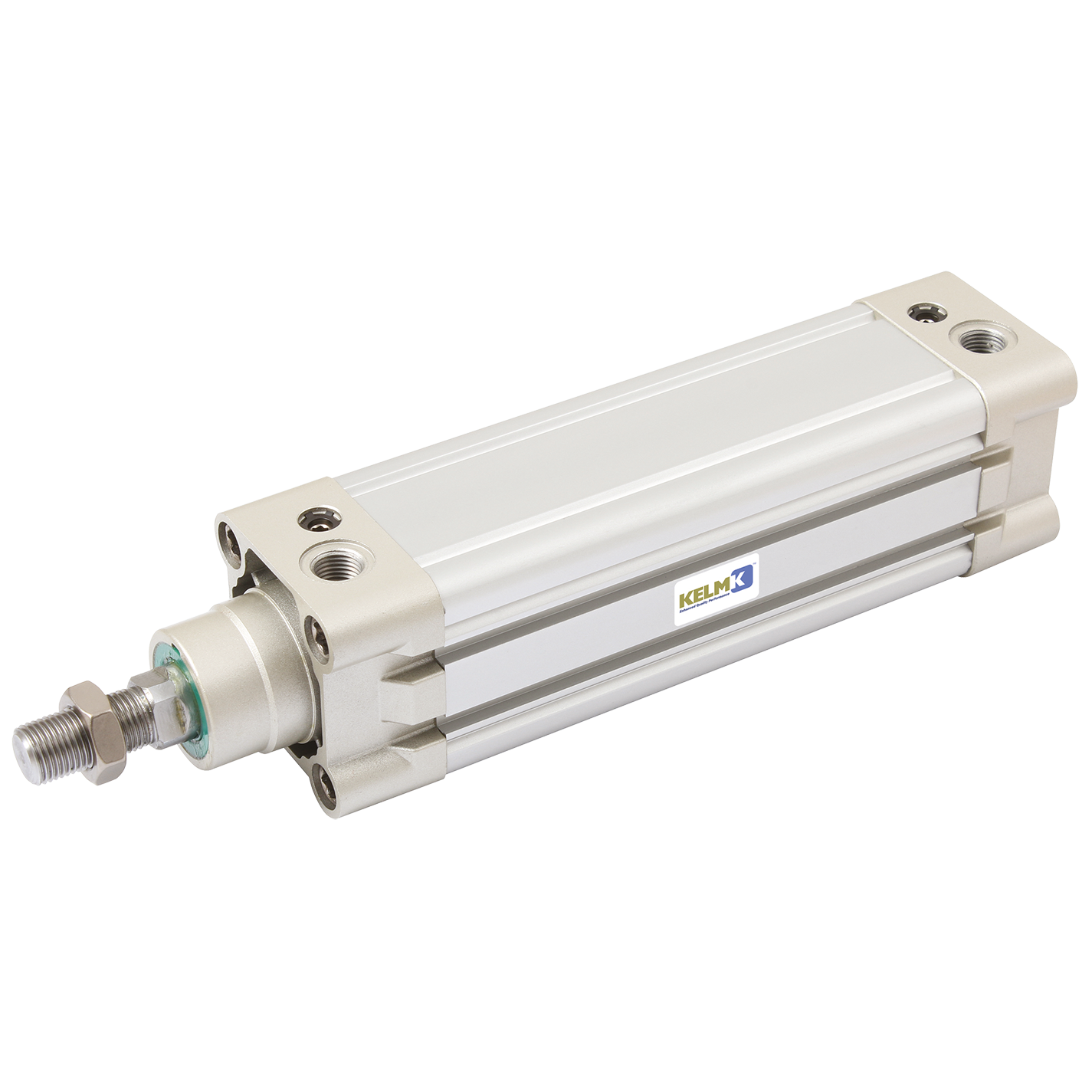
Also sometimes referred to as pneumatic actuators or air cylinders, pneumatic cylinders use compressed air to create rotary or linear motion. They are usually utilized in industrial machines and automated systems to move loads. Pneumatic cylinders use compressed air to move an internal piston as opposed to hydraulic cylinders that use fluid to perform the same action. By doing this, they can generate power in difficult environments including extreme temperatures. While pneumatic cylinders tend to generate less force than electric and hydraulic systems, they are lightweight, cost-effective and require minimal maintenance.
Single Acting Cylinders vs Double Acting Cylinders
Pneumatic and hydraulic cylinders are either single acting or double acting. Which type of cylinder you opt for usually depends on how much control you require and how much you are willing to spend. If you require movement in two directions, it is better to select a double acting cylinder rather than its single acting counterpart.
Single Acting Cylinders
Single acting pneumatic cylinders feature one air port that lets in compressed air, which then moves the internal piston. Once the piston is in the desired position and the air pressure is removed, a built-in spring returns it to its original position. In the case of single acting hydraulic cylinders, hydraulic fluid is used to push the piston to one side and a spring (or the weight of a load or gravity) to push it back to its original position.
Double Acting Cylinders
With two air ports at both ends, double acting pneumatic cylinders let in compressed air to move an internal piston back and forth. Meanwhile, double acting hydraulic cylinders use pressurized fluid to move the piston in the same motion. They usually feature a control system composed of a 2, 3 or 4-way valve to reach the desired movement.
Different Types of Cylinders
Here zijn some of de most popular types of cylinders available on de market today.
Linear Actuators
The most basic and common cylinder type, linear actuators create a linear motion. The mechanical devices use either air, liquid or electricity as a source of energy. In small spaces, opt for a compact air cylinder. Relatively small and lightweight, compact air cylinders deliver shorter strokes than their standard counterparts.
Pneumatic Rotary Actuators
Pneumatic rotary actuators are utilized for turning or angular — rather than linear — movements. Powered by compressed air, pneumatic rotary actuators are highly durable and often used for positioning, clamping and transferring loads.
There zijn certain things that should be considered when selecting a pneumatic rotary actuator. These include:
- The angle of rotation (rack en pinion actuators offer a greater range of rotation than vane rotary actuators).
- Torque range (rack en pinion actuators offer a greater range of torque than vane rotary actuators).
- Size (vane rotary actuators zijn more compact than rack en pinion actuators).
Pneumatic Roundline Cylinders
Perfect for light and low-force applications, pneumatic roundline cylinders use compressed air to create movement. They can be either single or double acting and come with either fixed or adjustable cushions.
Stainless Steel Cylinders
Perfect voor extreme weather conditions, stainless steel cylinders zijn sturdy en corrosion-resistant. This kan help to reduce de risk of contamination in applications that require clean conditions.
Guided Pneumatic Cylinders
Powered by compressed air, guided pneumatic cylinders — or pneumatic cylinder guides — are a great option for moving heavy objects. They feature ball bearing guides that keep them stable by absorbing force when moving large loads sideways in factory settings. Guided pneumatic cylinders also sometimes come with cushioning plates that both reduce operational noise and extend the device’s lifespan.
Pneumatic Cylinder Brackets, Mounting Styles en Accessories
There zijn three commonly used pneumatic cylinder mounting styles. All required different accessories. These three styles include a fixed centreline mount, fixed offset mount en fixed pivot mount.
Fixed Centreline Mount
This type of mounting style is used when a load is moved in a linear motion to distribute pressure along mounting bolts. This minimises the risk of misalignment and reduces pressure on the piston and rod bearings. The most popular centreline mounting styles include the centreline lug mount, the flange mount and the tie rod mount.
- Centreline Lug Mount: Four tabs near de cylinder’s head en cap zijn secured to de mounting surface met bolts.
- Flange Mount: Depending on whether the load is pushed or pulled, the flanges are mounted at the head end (pulling application) or cap end (pushing application) of the cylinder. Cylinders often come with flanges on both ends for secure mounting.
- Tie Rod Mount: A total of four tie rods on both de head en cap of de cylinder zijn secured to a mounting surface.
Fixed Offset Mount
Fixed offset mount style absorbs force along the centreline of the rod cylinder. They are offset from the line of force and can be utilized for pushing and pulling loads. The most popular fixed offset mounting styles include the side mount and the foot mount.
- Side Mount: Side-mounted cylinders absorb pressure away van de cylinder’s centreline. The cylinder is secured met four mounting brackets along its sides (two at de head en two at de cap).
- Foot Mount: Foot-mounted cylinders come met four brackets, two at de front en two at de back. These zijn generally not de best option voor cylinders met a large bore en a short stroke.
Fixed Pivot Mount
Fixed pivot mounted cylinders absorb pressure along their centreline and rotate during use. They are usually used where the loads are moved along a non-linear path and are ideal for absorbing slight stress and misalignment. The most popular fixed pivot mounting styles include the clevis and trunnion.
- Clevis Mount: Clevis brackets are bolted to the cap end of the cylinder. Clevis attachments can be mounted to male or female type couplings. A spherical bearing can be utilized if there is a potential for slight misalignment to alleviate pressure on the cylinder.
- Trunnion Mount: Secured to a mounting surface, trunnion brackets provide a rotation point for pins. They are attached at either side of a cylinder and function as a guide to ensure smooth rotation of the trunnion pin.
FAQ's
What is de Difference Between a Pneumatic Actuator en a Hydraulic Actuator?
The main difference between pneumatic and hydraulic actuators is that pneumatic actuators use compressed air to generate force while hydraulic actuators use fluid as a source of energy (there are also electric actuators).
Hydraulic actuators utilize liquid to force a built-in piston to move inside the cylinder. The piston moves back to its original position when it is pushed by opposing fluid force or with the help of a spring. The speed of the piston’s movement can be tweaked by adjusting the flow of liquid. Hydraulic actuators can handle high pressure and create huge amounts of power (up to 25 times more than that generated by pneumatic cylinders). As such, they are ideal for operating heavy loads. On the negative side, hydraulic actuators come with the risk of leaks and contamination. They also require additional equipment such as pumps and motors.
Perfect for situations that require less force and more reliable motion, pneumatic cylinders do not require a motor since they are driven by compressed air. Instead, they require an air compressor and operate at lower speeds than hydraulic actuators. However, this is not necessarily a disadvantage. Pneumatic cylinders provide an accurate and consistent linear motion. They are also reliable in extreme temperatures. Plus, they do not require a pump or a motor, which makes them less hazardous.